
Fashion and Extractivism: Territorial Appropriation and the Absence of Value Redistribution in Global Design

Contemporary fashion operates within a global structure that reproduces historical inequalities by transforming territories of the Global South into reservoirs of raw materials, aesthetics, and cultural narratives without establishing mechanisms of return. This dynamic reflects an economic order that, as recent analyses argue (Hickel, 2020), concentrates wealth in consumption centers while externalizing social and ecological…
Fashion and Ethnic Dysphoria: Tensions Between Representation, Identity, and the Social Gaze

Ethnic dysphoria has become a key concept for understanding the discomfort experienced by racialized individuals when their features, origins, or bodies confront aesthetic systems that privilege homogeneity. Although it is not a formal clinical diagnosis, social psychology has shown that pressure to conform to dominant norms can generate persistent identity tensions. Homi Bhabha (1994) explains…
Fashion and Gentrification: The New Visual Hegemony of Transforming Neighborhoods

Gentrification has been described by Sharon Zukin as a process in which capital, global middle classes, and cultural industries reconfigure historically working‑class neighborhoods, transforming not only their economic structures but also their symbolic identities. In her foundational analysis, Zukin argues that culture—including everyday aesthetics—operates as a mechanism of legitimization that renders certain territories desirable for…
Latin Music and Fashion: The Resistance Biopolitics Cannot Regulate
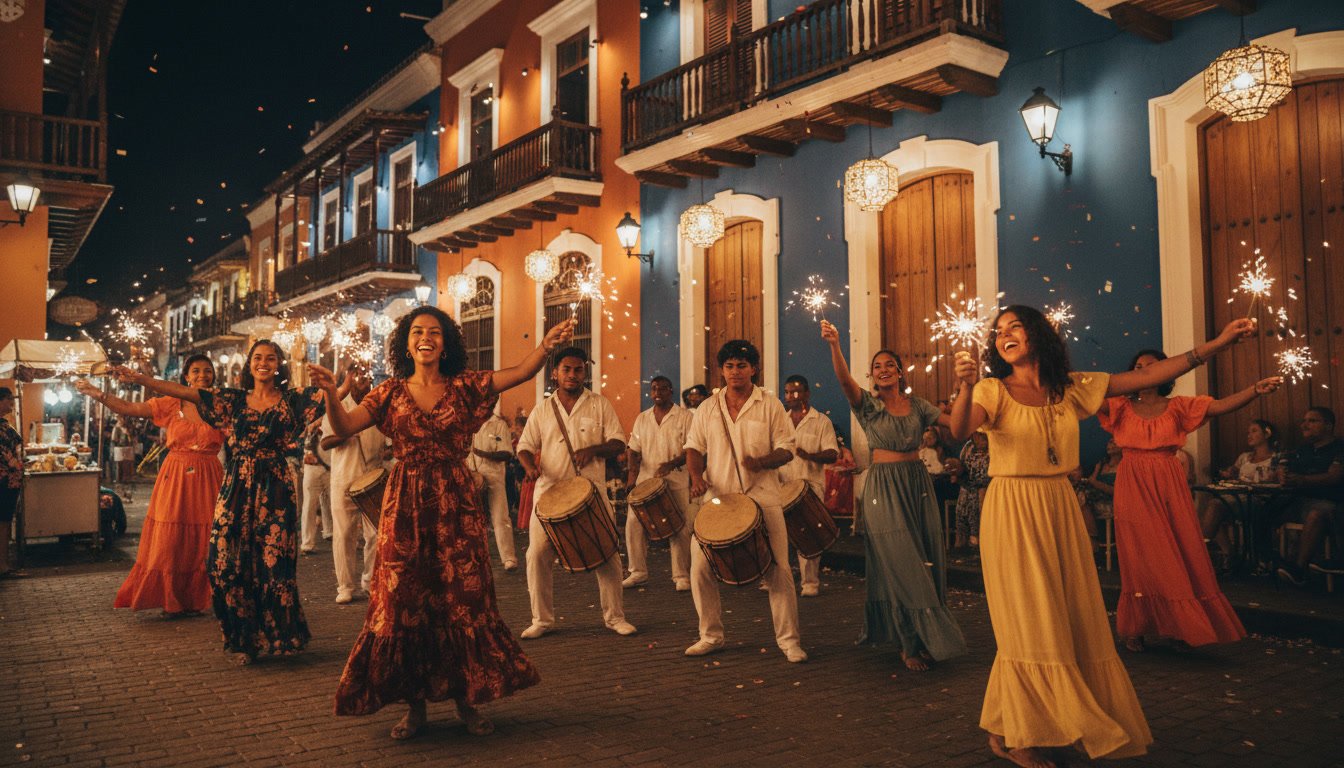
Thinking about Latin music and fashion through the lens of biopolitics means recognizing that both are territories where life expresses itself beyond the frameworks that attempt to regulate it. From rhythms born in the margins to aesthetics emerging from the streets, music and fashion operate as practices that overflow cultural control mechanisms, which means that…
The Algorithmic Mirror: Digital Influence as Cultural Distortion

Digital influence has become a structural force reshaping how aspirations are constructed, how information circulates, and how consumption decisions are formed. Far from being a superficial trend, the influencer operates as an economic, symbolic, and emotional agent whose presence actively molds collective behavior. In this context, understanding both the economic magnitude of the industry and…
When Design Becomes Power: Cultural Translation as a Site of Dispute

Design operates within an ecosystem of meanings where every visual, material, and narrative decision contributes to the construction of symbolic power. Research in cognitive sciences and intercultural communication has demonstrated that translating culture involves reorganizing hierarchies, activating mental frameworks, and redefining how communities interpret the world. A study published in PLOS One shows that cultural…